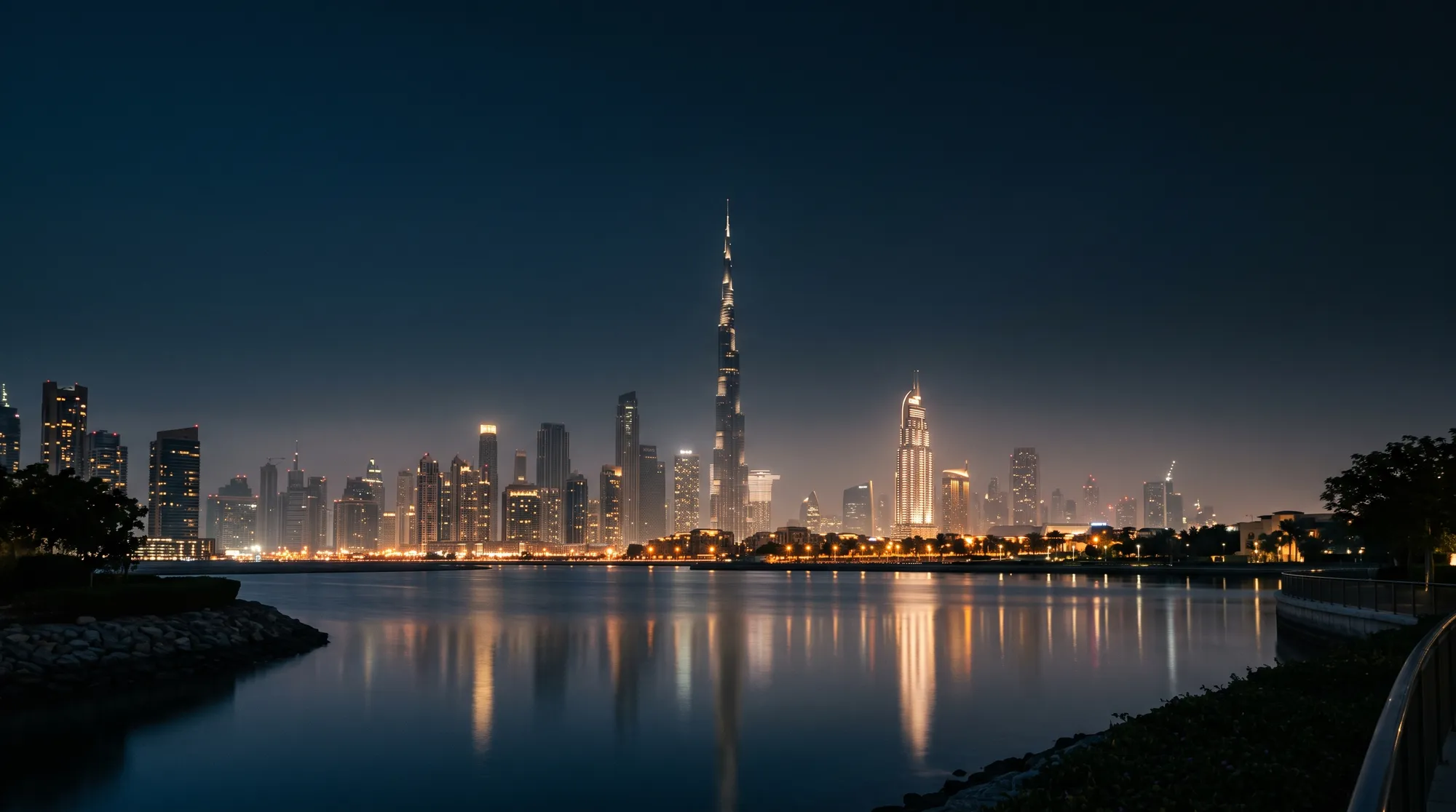




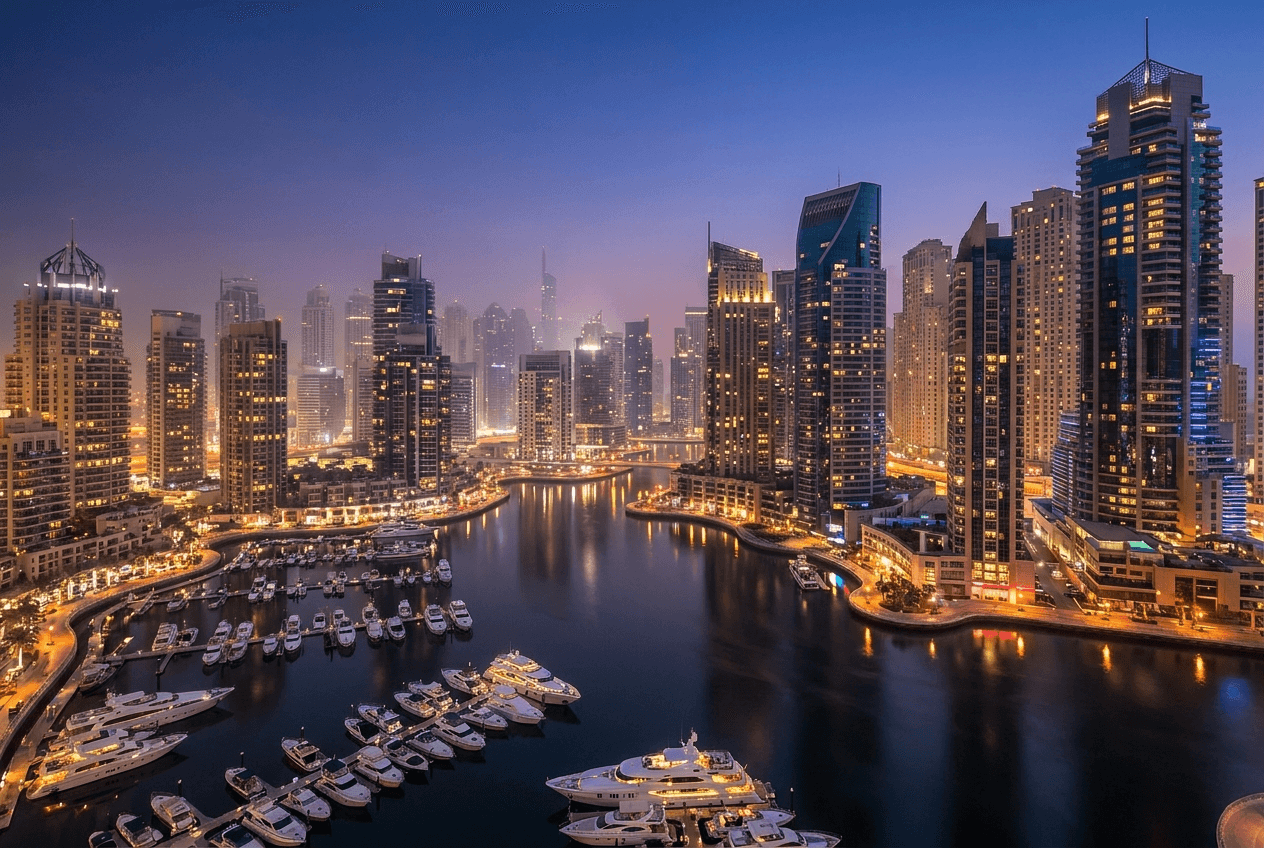

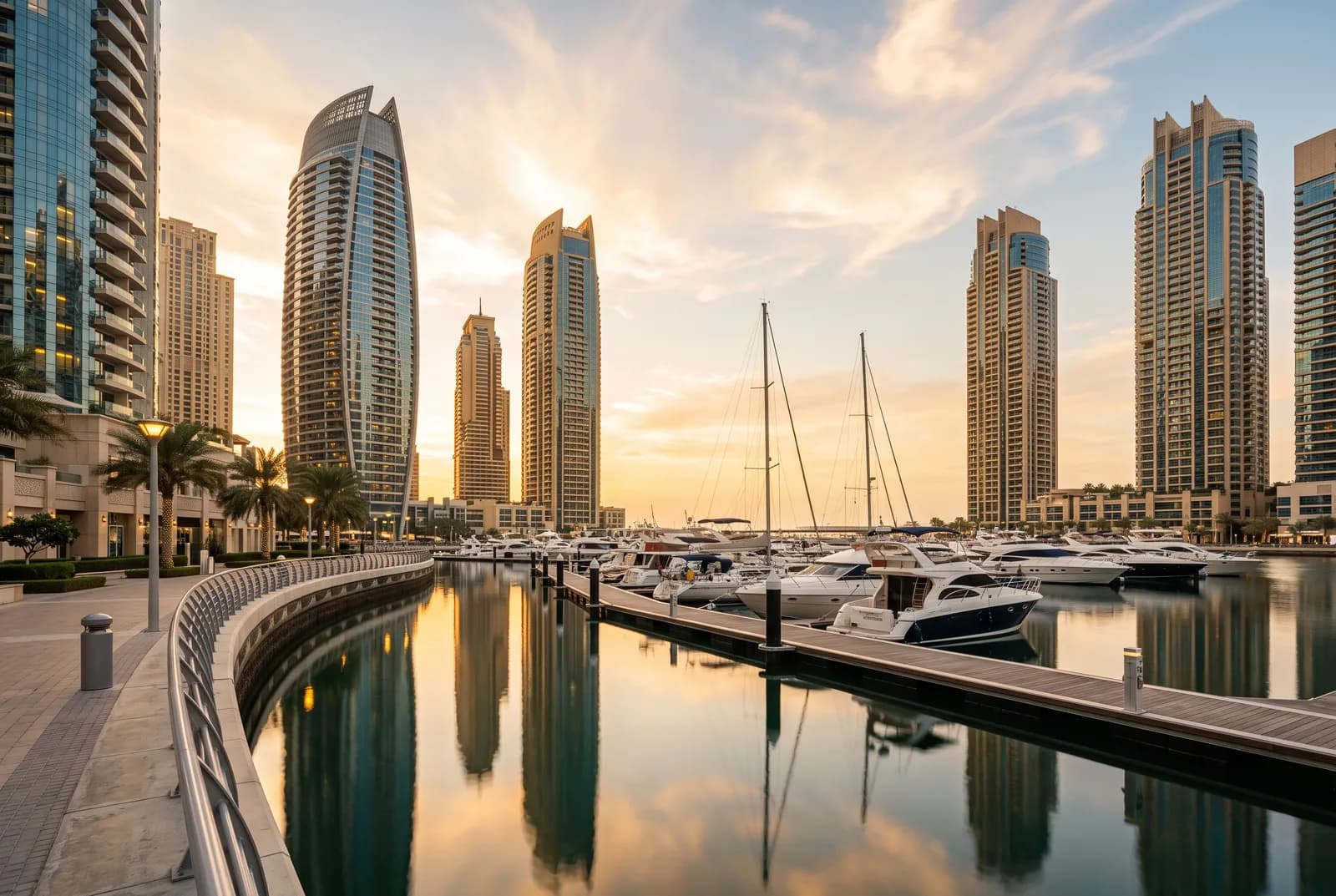
Dubai Marina at blue hour, illuminated towers reflected in the water

United States · Investor guide

Dubai Real Estate for American Investors

Own tax-free, dollar-pegged property in the world’s most dynamic city, bought remotely, protected by regulation, guided by an American who has done it.

A fast-growing, English-speaking investor market

Quick answer

Can Americans buy real estate in Dubai?

Yes. U.S. citizens can purchase freehold property in designated Dubai areas without UAE residency or a local partner. American investors can also buy remotely, obtain financing in qualifying circumstances and potentially qualify for the 10-year Golden Visa through eligible property ownership.

Typical gross yields
6–9%
UAE income & property tax
0%
AED pegged to
US Dollar
Golden Visa from
$545K

Why Dubai

Why American investors choose Dubai

For a growing number of American investors, Dubai has moved from curiosity to conviction. A tax-free environment, a currency pegged to the dollar, full freehold ownership, and some of the strongest regulated rental yields in the world make it one of the most compelling places an American can put capital to work, without ever leaving home to do it.

The challenge has never really been eligibility. It’s information. Most Americans simply haven’t been shown how straightforward, protected, and remote-friendly the process actually is. That’s the gap GG Benitez International exists to close.

01

The dirham is pegged to the dollar

The UAE dirham has been fixed to the US dollar since 1997. For an American investor that means effectively no currency risk on your purchase price or your returns.

02

Tax-free income and gains

Dubai levies no personal income tax, no annual property tax, and no capital-gains tax on your property. (As a US person you still file with the IRS — we’ll point you to the right cross-border advisor.)

03

Full freehold ownership

Americans can own property outright — 100%, freehold, in their own name — in Dubai’s designated freehold areas. No local sponsor or partner required.

04

Strong, regulated yields

Gross rental yields commonly run 6–9%, well above most US metros, inside a market regulated by RERA and the Dubai Land Department.

05

Buy entirely from the US

Most of our American clients purchase remotely — documents signed electronically, funds moved through regulated channels, and property management handled locally.

06

A global lifestyle base

Nonstop Emirates routes, a 0% income-tax lifestyle, and Golden Visa eligibility make Dubai a long-term base for many families — not just an investment line item.

Due diligence

What American Investors Are Right to Be Cautious About

I am bullish on Dubai real estate. That does not mean I am bullish on every property, every developer or every area in Dubai.

From the day I entered this market, one of the first things I wanted to understand was where the real opportunity existed before it became obvious to everyone else.

I started looking for areas that were still underdeveloped, potentially underpriced relative to where they were headed, and strategically connected to Dubai’s 2040 Urban Master Plan.

Why?

Because I want to understand where the infrastructure, transportation, employment, population growth and government planning are going before I recommend an investment.

My goal has always been the same: look for the lowest reasonable risk with the strongest potential outcome.

Here are several things I believe American investors should think about before buying.

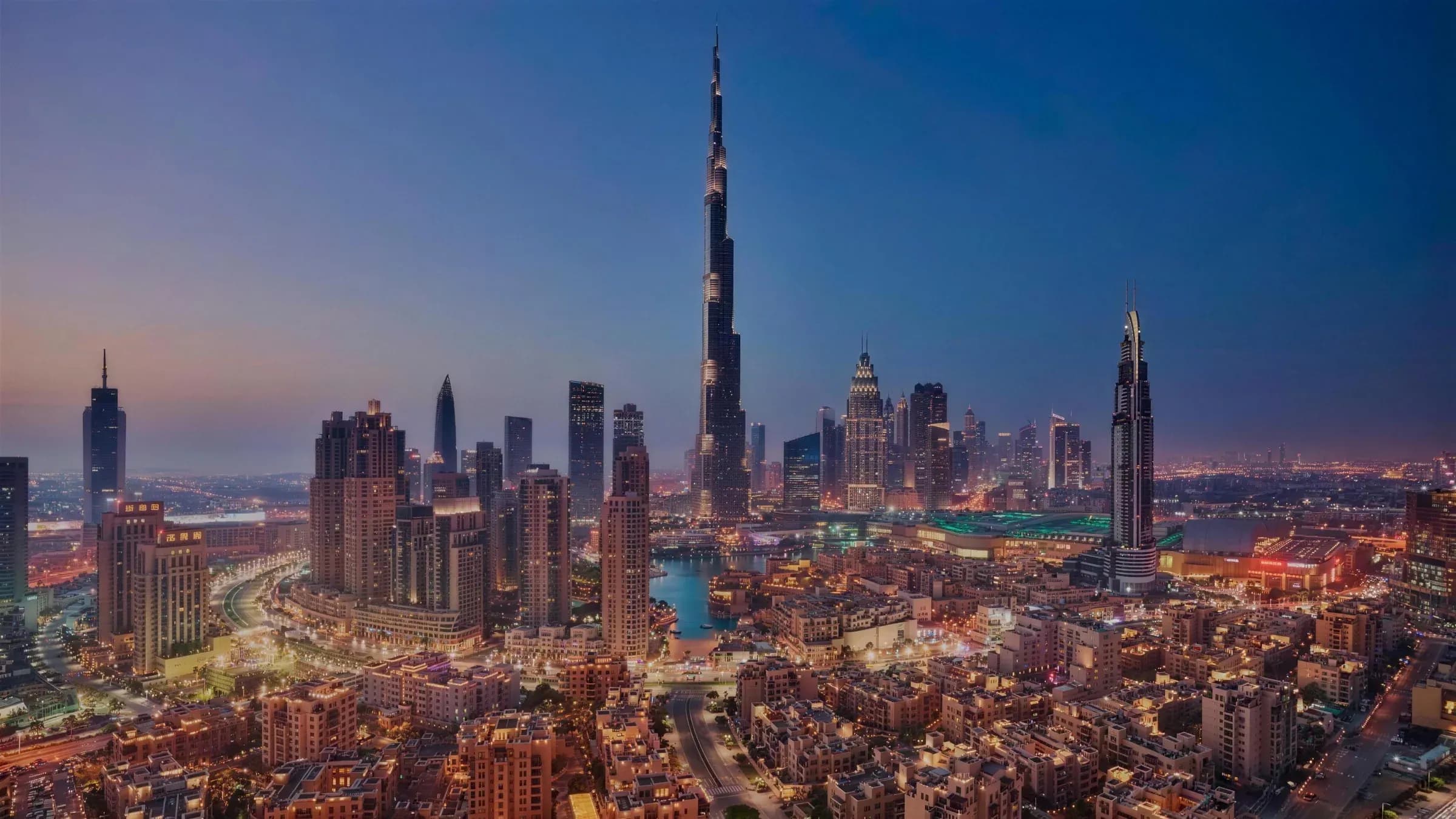
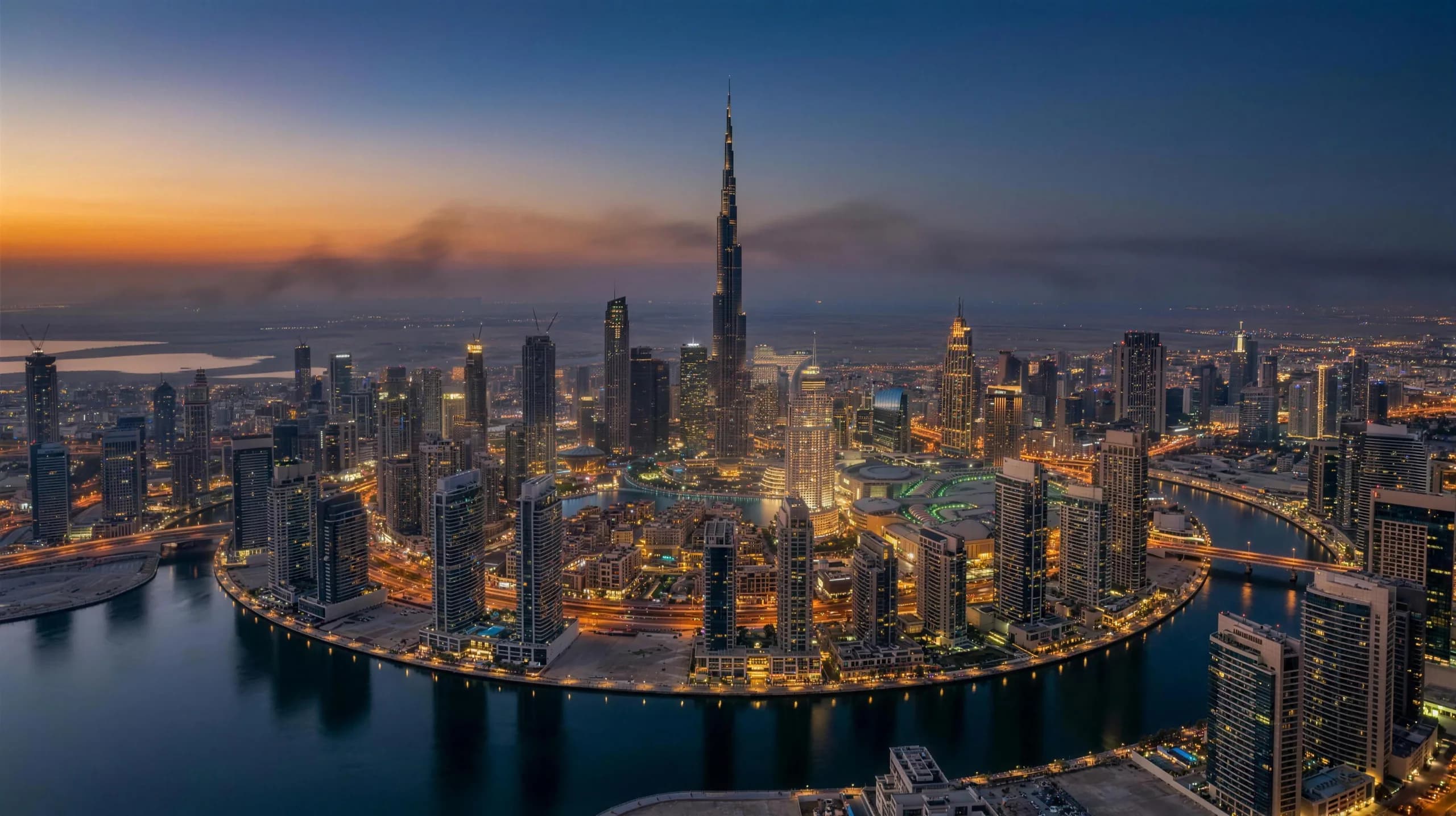
Downtown Dubai at dusk, seen from above01

Dubai is not one real estate market.

GG Benitez

01 / 06

Oversupply Is Not a Dubai-Wide Question

I hear this objection constantly:

“Is Dubai becoming oversupplied?”

I think that is the wrong question.

Dubai is not one real estate market. It is made up of very different communities, property types and stages of development.

What I care about is what is happening in the exact submarket where my client is considering investing.

  • How many competing units are coming?
  • What type of property is actually scarce?
  • Who is expected to live or work there?
  • What infrastructure is being built?
  • Is the area connected to Dubai’s long-term master plan?
  • Are we entering before the infrastructure and demand are fully priced in, or after everybody already knows the story?

From the beginning, that has been part of my strategy.

I have consistently looked for opportunities where I believe scarcity or future demand could help protect the investment, including waterfront opportunities, villas and townhouses, commercial real estate, and communities connected to major infrastructure and Dubai’s long-term growth plans.

The Dubai 2040 Urban Master Plan matters to me because it helps investors understand where the city itself is planning future growth.

That does not mean every project located inside a future-growth area automatically becomes a good investment.

It means infrastructure, transportation, employment centers, population growth and government planning become part of the due diligence.

What I care about: not simply how much Dubai is building, but how much competing supply is coming into that specific market compared with the future demand for it.
Watch my explanation of the Dubai 2040 Urban Master Plan

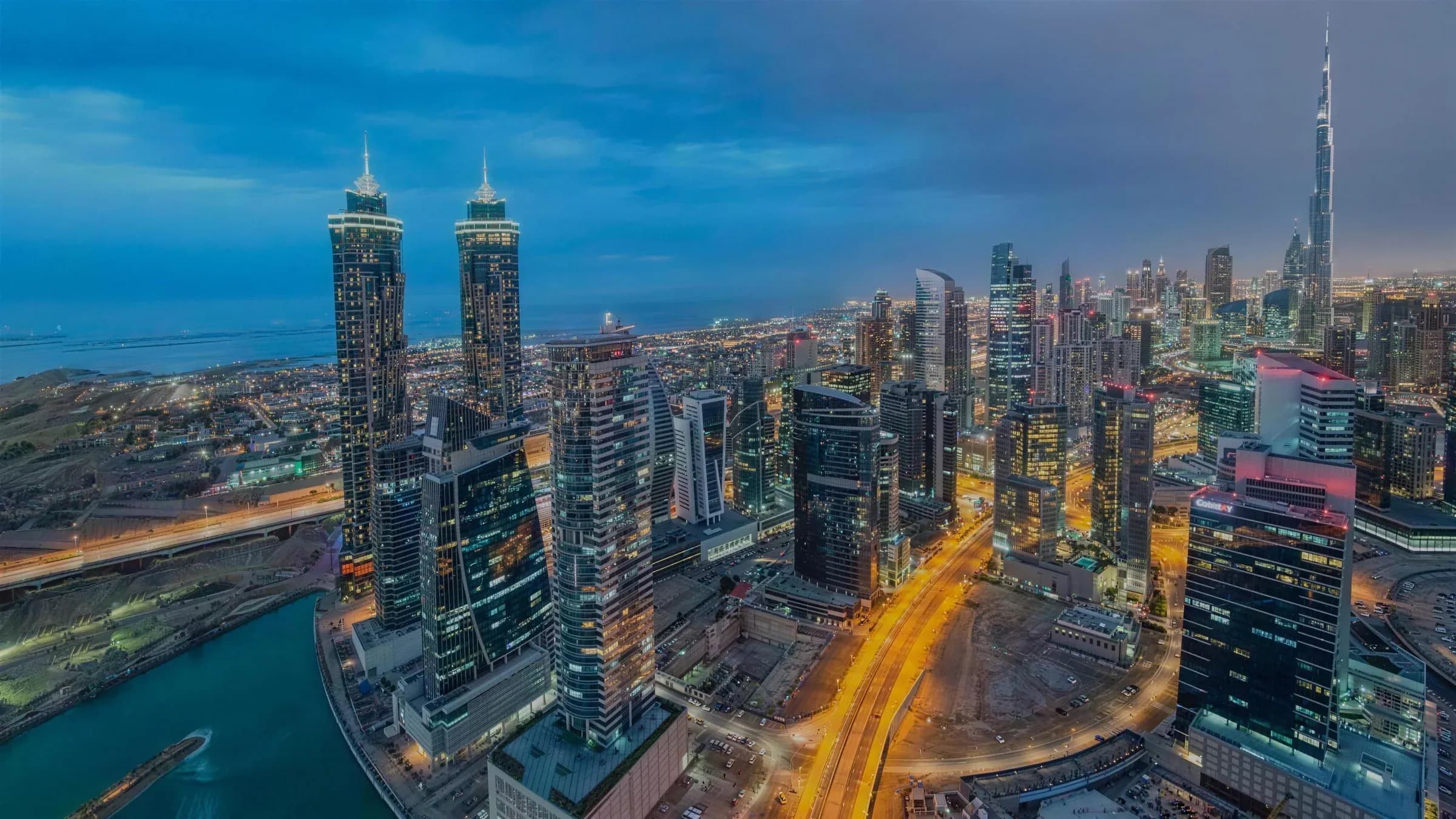
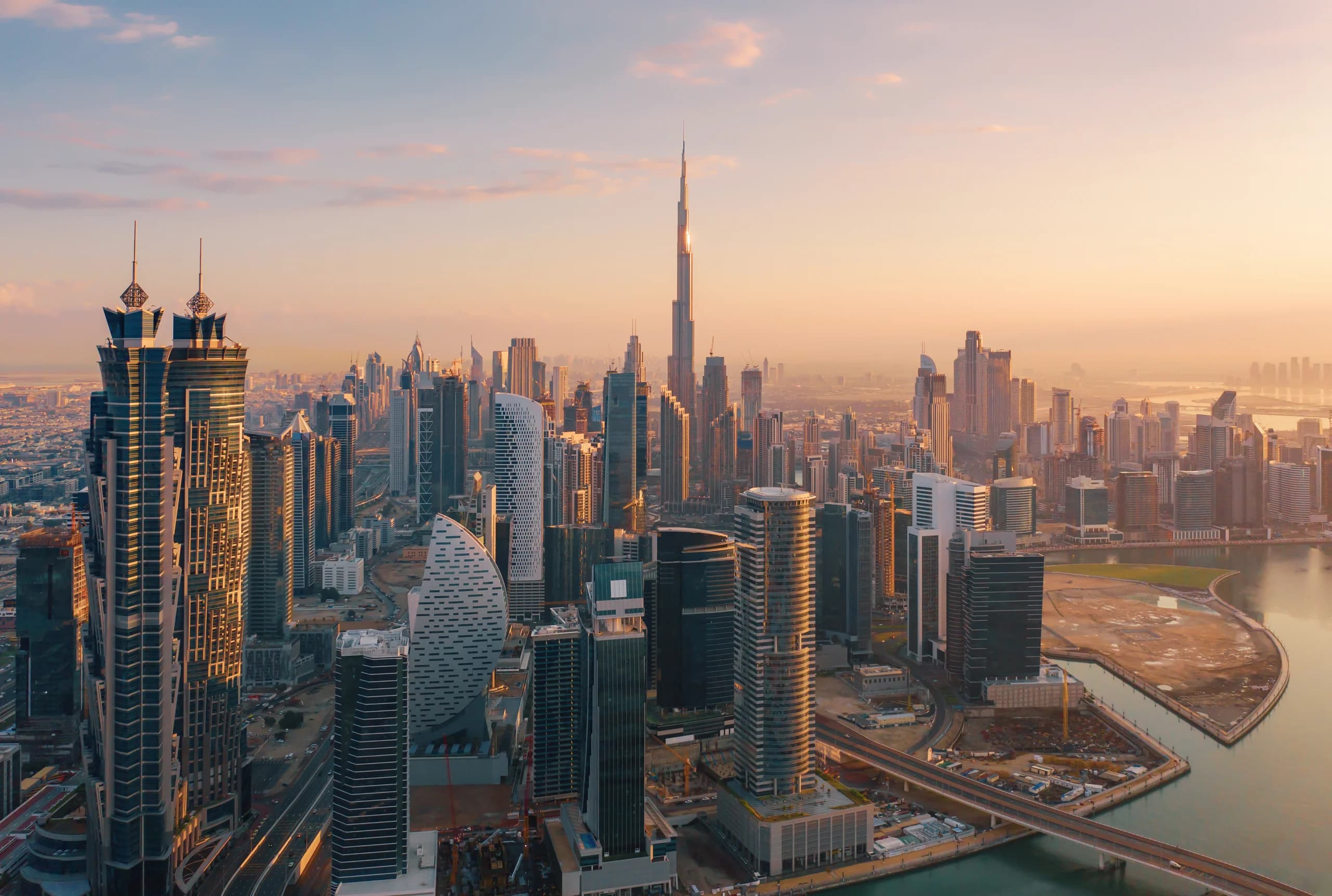
Towers under construction along the Dubai Canal in Business Bay02

Developer, developer, developer.

GG Benitez

02 / 06

Location Matters. In Dubai, the Developer Can Matter Just as Much.

As an international real estate advisor, I have spent years saying:

Location, location, location.

I still believe that.

But Dubai taught me something else:

Developer, developer, developer.

Two developers can build properties almost next door to one another and I do not believe those properties should automatically be expected to maintain the same value, command the same rent or ultimately resell at the same price.

  • Quality matters.
  • Reputation matters.
  • Brand recognition matters.
  • Amenities matter.
  • Delivery history matters.
  • And what happens to the property after handover matters.

A developer with a strong reputation can create confidence in the resale market that another project in almost the exact same location may not have.

That is why I do not choose an investment simply because I like the location.

I want to know who is building it, what they have delivered before, how those previous projects have performed and whether they have a long-term strategy for the community.

A beautiful rendering and an attractive payment plan can help sell a property.

They do not automatically make it a good investment.

What I care about: location and developer have to work together.

Read my guide: How to Choose the Right Developer in Dubai.

Dubai Marina towers at the waterfront03

I want to think about the exit before we ever make the first payment.

GG Benitez

03 / 06

Your Exit Strategy Should Start Before You Buy

If you are investing, the objective is ultimately to make money.

That sounds obvious, but investors often spend far more time thinking about how they are going to buy a property than how they are eventually going to exit it.

I want to think about the exit before we ever make the first payment.

  • Who is the eventual buyer?
  • Who is the likely tenant?
  • Is that demographic primarily families, executives, tourists, entrepreneurs or another investor?
  • Will the property make more sense as a long-term rental, short-term rental or eventual resale?
  • When is the surrounding community expected to mature?
  • What financing could potentially be available to the next buyer?
  • If you want to sell before handover, what resale restrictions or payment thresholds does that particular developer have?
  • Who will manage the property?
  • Who will secure the tenant?
  • Who will help you obtain financing if financing becomes part of the strategy?
  • And when it is time to sell, who is actually going to execute the exit?

Those are not questions I want my clients asking three years after buying.

I want them considered before the investment is made.

This is also why I believe international investors should work with an advisor who understands more than the initial sale.

My role is not simply to help somebody reserve a unit.

I want to understand the investment from acquisition through financing, rental strategy, management and eventual exit.

What I care about: every investment should have a clear entry strategy, hold strategy and exit strategy.

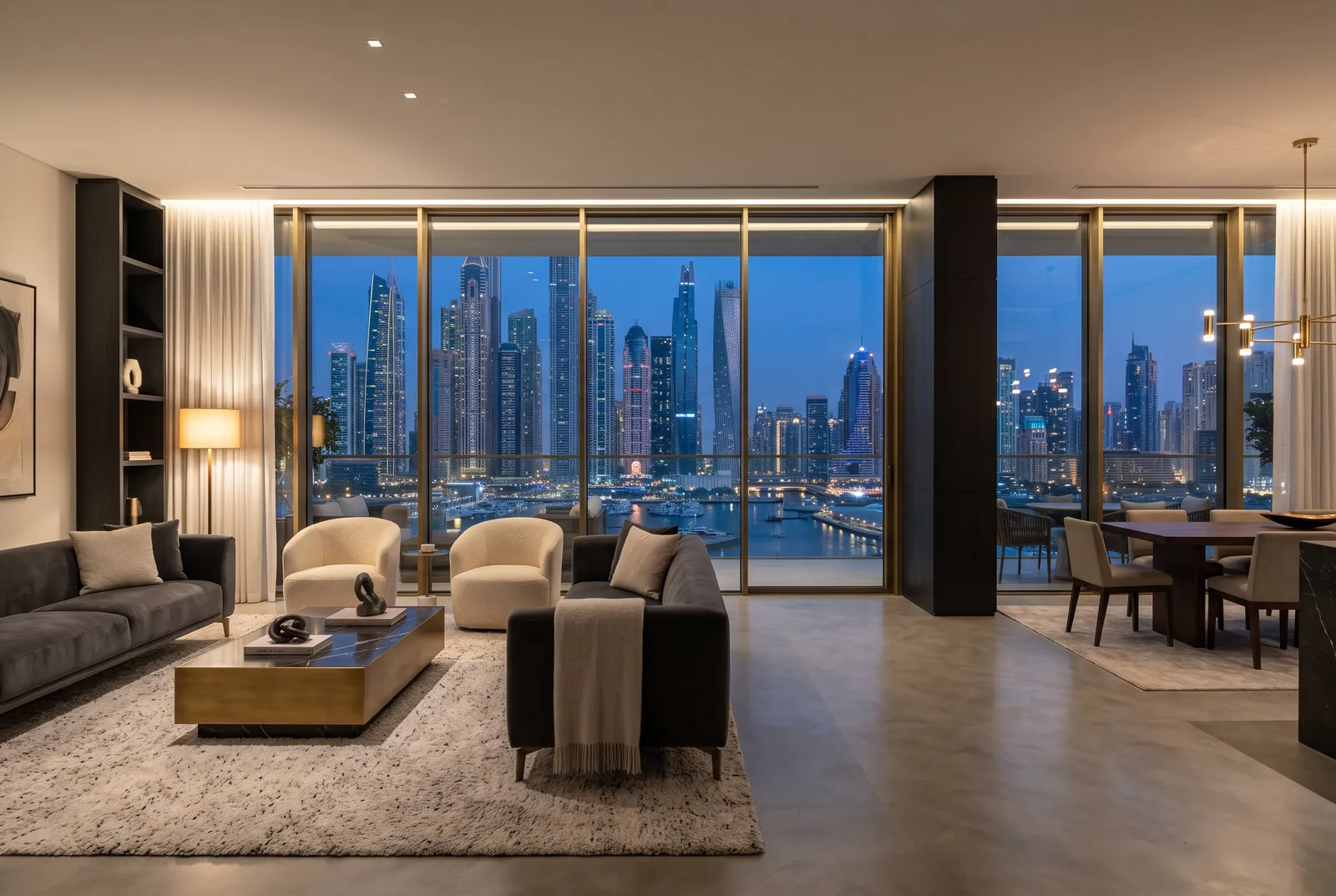
Interior of a furnished Dubai penthouse at golden hour04

8% based on what?

GG Benitez

04 / 06

Be Careful With Headline Yield Numbers, But Understand the Actual Dubai Economics

If somebody simply tells an investor:

“This property will make you 8%.”

My next question is:

8% based on what?

There is a difference between gross rental yield and what an investor actually keeps.

But I also think it is important not to apply U.S. assumptions automatically to Dubai, because some of the ownership economics can be quite favorable.

Depending on the rental structure, certain costs that an American investor may assume they will absorb themselves can sometimes be borne by the tenant.

For long-term rentals, for example, leasing commissions are often structured differently than Americans may be accustomed to.

Maintenance responsibilities can also vary depending on the building, service arrangements and tenancy agreement.

Furnishing can be considerably less expensive than many U.S. investors expect, depending on the property and the level of finish.

Short-term rentals are different.

Professional management is a real operating expense and it should absolutely be included when underwriting the investment.

I have discussed this directly on The Dubai Connect® Podcast with professional property-management operators, including the actual management percentages and operating considerations investors should understand.

So I do not automatically dismiss an attractive projected yield.

I simply want to know what assumptions are behind it.

  • What rent are we realistically expecting?
  • What vacancy are we assuming?
  • What are the service charges?
  • What management structure are we using?
  • What does the property realistically produce after the relevant expenses?

What I care about: the actual economics of the property, not simply the percentage printed in a sales presentation.

Listen to my conversation about short-term rental management in Dubai

The Dubai skyline at dusk05

Dubai being tax-efficient does not mean an American simply stops having U.S. tax obligations.

GG Benitez

05 / 06

Dubai Can Be Tax-Efficient for Americans, But You Still Have U.S. Obligations

Dubai’s tax environment is one of the reasons many American investors become interested in the market.

But there is an important distinction:

Dubai being tax-efficient does not mean an American simply stops having U.S. tax obligations.

American citizens can still have U.S. tax and reporting obligations involving worldwide income.

Depending on the investor and how the investment is structured, that can include questions involving rental income, foreign accounts, FBAR, FATCA, ownership entities and other reporting requirements.

At the same time, there may also be completely legal strategies available to structure an international investment more efficiently depending on the investor’s individual circumstances.

This is exactly why I do not pretend to be the tax professional.

My role is to recognize when the tax conversation matters and bring the right professionals into the process.

I have an episode of The Dubai Connect® Podcast with a CPA based in Dubai who works with international investors, including Americans, specifically discussing these issues.

That is the kind of expertise I want my clients to have access to before making a cross-border investment.

What I care about: understanding both sides of the investment, Dubai and the United States, before making the decision.

Listen to my conversation with a Dubai-based international CPA

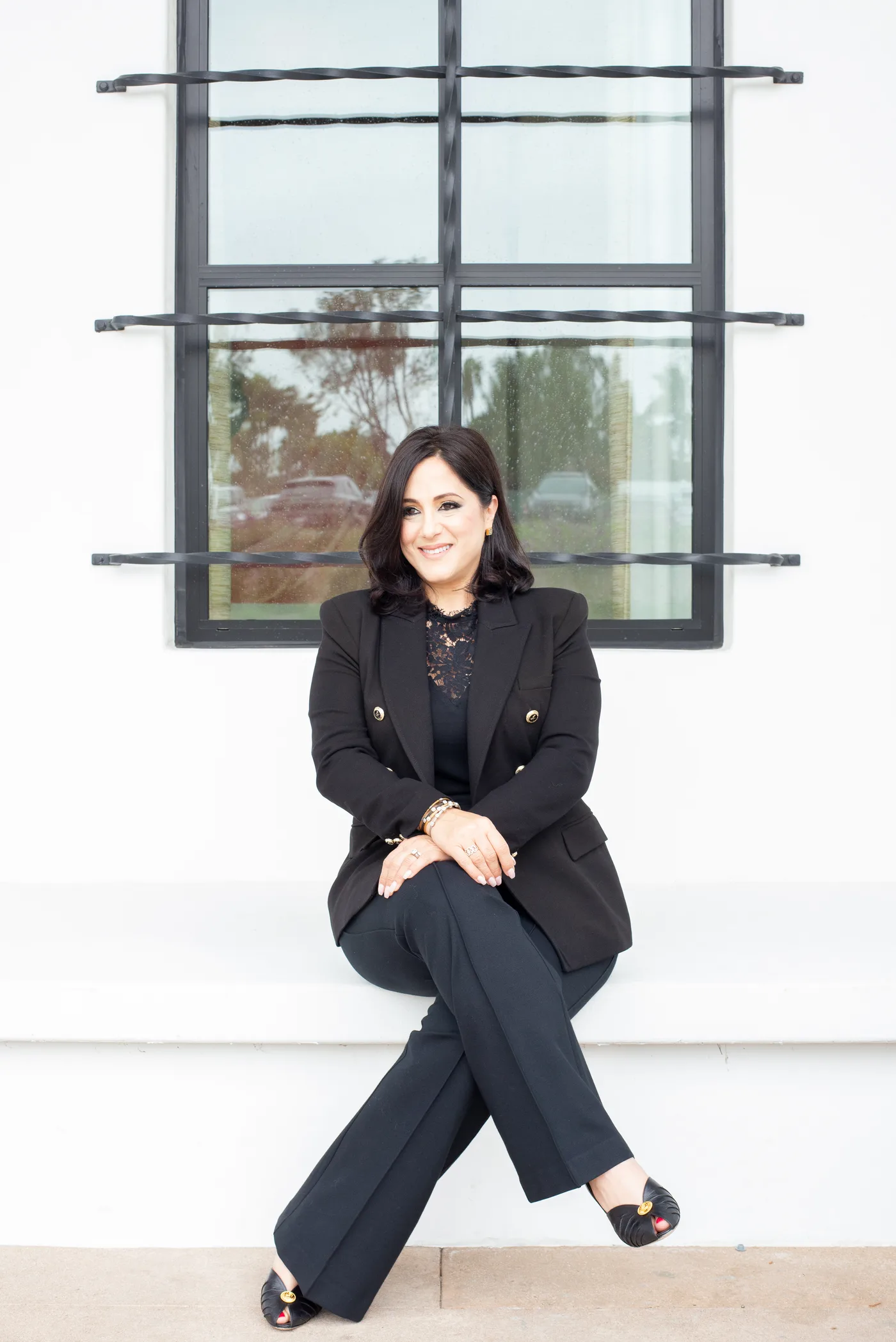
Ghada "GG" Benitez06

Sometimes the right decision is not to buy at all.

GG Benitez

06 / 06

Why This Matters to Me

I do not believe my job is to find a project and convince somebody to buy it.

My job is to eliminate as many bad decisions as possible before we ever get to the purchase.

That means asking:

  • Is this area entering at the right point in its growth cycle?
  • Is there actual scarcity?
  • What does future supply look like?
  • Where is the infrastructure money going?
  • Is the developer strong enough?
  • Who is the future tenant?
  • Who is the future buyer?
  • What is the realistic return?
  • What is the exit?
  • And what happens if the market does not perform exactly as projected?

That approach became even more important to me during the unexpected regional uncertainty in the second quarter of 2026.

The investments I had already recommended to my own clients had been selected around long-term demand drivers, scarcity, developer quality and areas where I believed there was a clear reason for future demand.

That does not mean any real estate investment is immune from market or geopolitical risk.

Nothing is.

But it reinforces why I believe discernment matters more than hype.

Sometimes the right investment is the project everybody is talking about.

Sometimes the better opportunity is the one they are not talking about yet.

And sometimes the right decision is not to buy at all.

The case in numbers

Where the yield actually is

Gross rental yield, Dubai versus the markets American investors know best.

  • Dubai7.5%
  • Miami4.8%
  • Los Angeles3.2%
  • New York2.9%

Indicative gross rental yields. Dubai reflects typical ready and off-plan stock; US metros are approximate market averages. Yields vary by building and are not a guarantee of return.

What’s different for you

The American investor’s essentials

The facts are the same for everyone, these are the things that are specific to buying from United States.

US taxes: the IRS, FATCA & FBAR

As a US citizen or green-card holder you report worldwide income and assets, so Dubai rental income and any gains are US-taxable even though the UAE doesn’t tax them. Foreign accounts above the threshold trigger FBAR and FATCA filings, and there is no US, UAE tax treaty, so coordination matters. We connect you with cross-border CPAs before you buy, not after.

This is general information, not tax or legal advice, we’ll connect you with the right specialist for your situation.

Luxury Dubai penthouse interior at golden hour, floor-to-ceiling windows over the skyline

A tax-free base in the world’s most connected city — bought on your terms, from wherever you are.

Step by step

How the process works

  1. 1

    Define your goals

    We start with your objective — yield, appreciation, a lifestyle base, or the Golden Visa — plus your budget and timeline.

  2. 2

    Shortlist & reserve

    We curate developments and communities that fit, then reserve your unit — typically about 10% down plus the 4% DLD fee for off-plan.

  3. 3

    Sign & transfer

    Your Sales Purchase Agreement is signed electronically and funds move by wire into regulated escrow. No travel required.

  4. 4

    Pay through construction

    For off-plan, staged payments follow the developer’s plan, released from escrow only as milestones are met.

  5. 5

    Handover & beyond

    At completion you take title, finance if you choose, and we arrange leasing, management, or resale — and your Golden Visa if eligible.

Ghada “GG” Benitez

Your guide

Ghada “GG” Benitez

A California-licensed REALTOR® and Dubai RERA-certified broker, GG guides Americaninvestors through Dubai with clarity, and built The Dubai Connect® to take them straight to the people shaping the market.

  • RERA Certified Real Estate Broker
  • Certified International Property Specialist (CIPS®)
  • California Licensed REALTOR®, DRE #01487964
  • Associate Director, U.S. & Global Markets, Prime Capital Realty, Dubai
  • Director of International Markets, Realty Executives Dillon

Build your conviction

The Dubai Connect®

Direct conversations with the people shaping Dubai real estate, senior Dubai Land Department officials, leading developers, mortgage and tax specialists. It’s how GG replaces uncertainty with first-hand facts.

Listen to The Dubai Connect®

Where to buy

Communities that suit American buyers

Good to know

American investors, common questions

Why Are Americans Investing in Dubai?
A growing number of Americans are exploring Dubai for several reasons: attractive price per square foot versus major U.S. cities, no annual property taxes, flexibility for long-term and short-term rentals, and the possibility of a 10-year Golden Visa. Most are not leaving the U.S., they are adding an international asset to diversify their portfolio.
Can Foreigners Open a Bank Account in Dubai?
Yes, foreigners can open bank accounts in Dubai, though the options may vary depending on whether you're a resident or non-resident. You do not need to be a UAE resident first, certain banks offer solutions for non-resident investors. Banking is best treated as part of your overall investment strategy, not an afterthought, since requirements vary bank to bank.
How Are Americans Taxed When Investing in Dubai Real Estate?
Even though Dubai imposes no personal income tax on rental income or annual property taxes, U.S. citizens remain subject to U.S. tax laws and reporting requirements regardless of where they invest. There are really two conversations: how the property is treated in Dubai, and how your investment is treated under U.S. tax law. Consult a qualified cross-border tax professional.
What's the Difference Between the Investor Visa and the Golden Visa?
They are not the same program. The Golden Visa is the long-term residency option generally associated with qualifying real estate investments of AED 2 million or more. The Investor Visa is a separate residency pathway that may have different qualification requirements depending on current regulations. Not every property owner automatically qualifies for the Golden Visa.
Can I Get Residency in Dubai Without Investing AED 2 Million?
In many cases, yes. The AED 2 million threshold is generally associated with the 10-year Golden Visa through qualifying real estate. But there are other investor residency pathways with different qualification criteria depending on current regulations, the property, and the ownership structure. Not every residency option requires the same level of investment.
Can I Get a Dubai Golden Visa with a Mortgage?
Yes, in many cases you can qualify for a Dubai Golden Visa even if the property is financed with a mortgage. You do not have to pay cash for the entire property. Qualifying mortgaged properties may be eligible, provided the property meets the applicable requirements and the investor satisfies the necessary criteria at the time of application.

Ready to invest in Dubai from United States?

From first question to handover, GG Benitez International guides Americaninvestors through every step. Let’s talk about your goals.