


Insights
Why More Americans Are Buying Property in Dubai in 2026: What I’m Hearing From Investors Across the United States
July 16, 2026 · Updated October 5, 2026
Written by Ghada “GG” Benitez

Last week, I walked out of another full day of investor meetings in Manhattan with pages of notes.
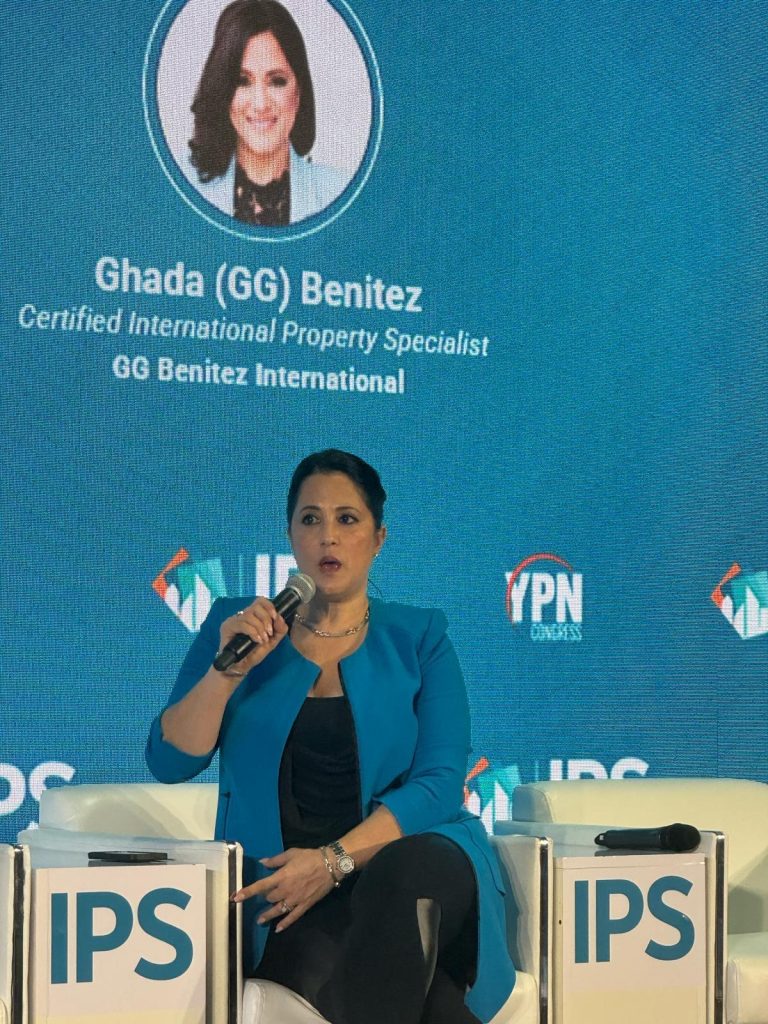
A few weeks before that, I had been back home in California meeting with investors there. Earlier this year, I spoke with physicians interested in international real estate investing at a conference in Florida. Throughout the year, I’ve advised clients from California, Texas, New York, New Jersey, Michigan, Maryland, Virginia, and Florida while continuing to spend significant time on the ground in Dubai.
Although every investor’s financial situation is different, I kept hearing the same questions.
Not:
“Can foreigners even buy property in Dubai?”
Instead:
“Should part of my portfolio be outside the United States?”
That shift says a lot about where American investors are today.
As a California Licensed REALTOR®, Dubai RERA Licensed real estate professional, and Certified International Property Specialist (CIPS®), I have the privilege of working in both markets. My role isn’t simply to help Americans purchase property in Dubai. It’s to help them understand whether Dubai belongs in their overall investment strategy.
This article isn’t about convincing anyone that Dubai is “better” than the United States.
I don’t believe investing is that simple.
The United States remains one of the strongest real estate markets in the world.
What I’m seeing instead is something much more interesting.
Many Americans are no longer choosing between investing in the U.S. or internationally.
They’re choosing to own both.
What I’m Hearing From American Investors
Whether I’m sitting with investors in Manhattan, speaking at educational events, meeting families in California, or advising clients from Texas, New Jersey, Michigan, Maryland, Virginia, and Florida, the conversations have become remarkably consistent.
Here are the themes that continue to come up.
Americans Still Believe Real Estate Creates Wealth
One thing hasn’t changed.
Americans continue to believe in real estate as one of the most effective long-term wealth-building tools.
Successful investors across generations have shared this philosophy. Warren Buffett has often emphasized owning productive assets. Sam Zell built an extraordinary career through commercial real estate. Barbara Corcoran has repeatedly encouraged investors to think long term.
The Americans I meet aren’t questioning whether real estate works.
They’re asking where the next opportunity might be.
Increasingly, that conversation extends beyond U.S. borders.
Diversification Has Become the New Goal
The word I hear most often isn’t “Dubai.”
It’s diversification.
Many of my clients already own homes or investment properties in California, Texas, Florida, or New York.
They’re not looking to replace those investments.
They’re looking to reduce concentration by adding exposure to another market with different economic drivers.
Just as investors diversify stock portfolios internationally, many now believe their real estate portfolio should reflect the same philosophy.
Dubai has become part of that conversation because of its growing global economy, international population, and business-friendly environment.
Investor Story: A California Client
One San Diego investor had owned California real estate for years.
After benefiting from significant appreciation over time, he wasn’t looking to leave California.
He simply wanted another growth market.
Instead of purchasing one property in Dubai, he created three different investment strategies.
The first was a residence his family could enjoy while generating income through licensed short-term rentals when they weren’t using it.
The second was an off-plan property purchased with the flexibility to potentially sell before completion if market conditions made sense.
The third was a long-term rental in a suburban community designed to generate steady income.
What impressed me wasn’t the properties themselves.
It was the strategy.
He wasn’t abandoning California.
He was building an international portfolio.
Own property in California and considering Dubai too? See how California and Dubai real estate compare.
Why More Americans Are Buying Property in Dubai in 2026: What I’m Hearing From Investors Across the United States
Affordability Changes the Conversation
One of the biggest surprises for Americans is what their investment dollars can buy.
When we compare many prime areas of New York, Los Angeles, San Diego, or Miami with newer developments in Dubai, investors often discover they can purchase high-quality properties with resort-style amenities at significantly lower entry prices.
This isn’t about declaring one market better than another.
Every market has different strengths.
Instead, it’s about understanding value, cash flow potential, operating costs, and long-term goals.
Those are the conversations sophisticated investors are having.
Investor Story: Manhattan
During my recent meetings in New York, one investor told me something I’ve now heard several times.
“I want to build rental income before retirement, but I feel priced out of the markets I’ve always watched.”
He wasn’t looking to sell his U.S. assets.
He wanted another market where he could continue growing his portfolio.
For him, Dubai represented diversification rather than replacement.
That distinction matters.
Safety Is Almost Always the Next Question
After discussing appreciation, rental income, financing, and neighborhoods, nearly every American investor eventually asks the same thing.
“Is it actually safe?”
That question is one of the reasons I invited Dr. Mahmoud Al Burai, Senior Advisor at the Dubai Land Department, onto The Dubai Connect Podcast.
Rather than asking investors to rely on marketing claims, I wanted them to hear directly from someone involved in shaping Dubai’s real estate ecosystem.
We discussed investor protections, escrow requirements, government oversight, transparency, and the systems designed to protect buyers.
For many Americans, that conversation changes how they think about investing internationally.
Want to hear the full conversation? Listen to this episode on The Dubai Connect® Podcast.
Buying Internationally Is Easier Than Most People Expect
One misconception I hear almost every week is:
“I assumed I’d have to move there or spend months managing the process.”
Today’s reality is very different.
Many transactions can be coordinated remotely.
Property tours.
Document signing.
Escrow.
Financing.
Property management.
Even furnishing a property.
Technology, professional advisors, and experienced local teams have made international ownership much more accessible than many investors realize.
Financing Surprises Almost Everyone
One of the biggest myths I hear is:
“I thought Americans had to pay cash.”
Not necessarily.
Through my interviews with mortgage professionals on The Dubai Connect Podcast, many investors are surprised to learn that eligible foreign buyers may qualify for financing through UAE banks.
That changes the conversation dramatically.
Instead of viewing Dubai as a cash-only purchase, investors begin evaluating it the same way they evaluate opportunities in the United States: balancing leverage, appreciation, cash flow, and long-term portfolio goals.
Wondering how mortgage financing works for foreign buyers? See how Americans can finance Dubai property.
Investor Story: Texas
One investor from Texas already owned multiple rental properties.
He believed in real estate.
He simply wanted geographic diversification.
His goal wasn’t to replace his Texas investments.
It was to reduce concentration by adding exposure to a different market with different economic drivers.
Like many experienced investors, he recognized that rental regulations, insurance costs, and operating expenses can vary considerably across U.S. markets. Adding Dubai allowed him to diversify while continuing to invest in an asset class he already understood.
Why Major American Companies Matter
One thing I encourage every investor to pay attention to is not just residential real estate, but where the world’s largest companies are investing.
Large corporations don’t commit billions of dollars because of short-term headlines.
They analyze population growth, tourism, infrastructure, government policy, business conditions, and long-term economic forecasts.
That’s one reason many of my American clients pay attention when they see companies making major commitments across the UAE.
Disney announced its first Middle East theme park and resort in Abu Dhabi.
Wynn Resorts is developing the UAE’s first integrated resort on Al Marjan Island in Ras Al Khaimah.
MGM Resorts continues advancing plans for its branded development in Dubai.
Citadel announced plans to establish a significant presence in Dubai.
None of these investments guarantee future real estate appreciation.
But they do tell us something important.
Many sophisticated organizations believe in the long-term future of the UAE.
As an investor, that’s worth paying attention to.
The U.S. Dollar Advantage
One fact surprises almost every American investor I meet.
The UAE dirham has long been pegged to the U.S. dollar.
For many investors, that provides an additional level of comfort because currency fluctuations are generally much smaller than they might expect in many other international markets.
It’s one more reason Dubai often feels more familiar than investors initially assume.
Taxes Usually Aren’t the First Reason
People often assume Americans invest in Dubai simply because there are no annual property taxes or local capital gains taxes on real estate.
Interestingly, that is rarely the first reason clients mention.
Instead, they talk about diversification.
Cash flow.
Lifestyle.
International exposure.
Building wealth across more than one country.
The tax advantages simply become another factor in the overall investment decision.
As a U.S. citizen, your American tax obligations continue to apply, so investors should always seek advice from a qualified U.S. tax professional regarding their individual situation.
Want the full tax picture? See how Dubai's tax-free structure works for investors.
Investor Story: Commercial Real Estate
Not every investor I work with is looking for residential property.
One client was interested exclusively in commercial real estate.
He was surprised to learn that foreign investors can purchase commercial property in Dubai without needing a local business sponsor simply because they are buying commercial real estate, not establishing a mainland operating company.
After evaluating several opportunities, he chose a commercial project in Business Bay.
Later, I invited the project’s representatives onto The Dubai Connect Podcast so listeners could better understand how commercial real estate investing works in Dubai.
Education always comes before investment.
The Question Every Investor Eventually Asks
Eventually, nearly every conversation shifts away from buildings.
Instead, investors ask:
“Who’s going to help me after I buy?”
That question is often more important than the property itself.
Buying internationally isn’t just about selecting the right investment.
It’s about having the right team.
Because I divide my time between California and Dubai, I’ve built relationships with attorneys, mortgage specialists, CPAs, property managers, banking professionals, developers, and relocation experts.
My goal has never been simply to introduce clients to a project.
It’s to help them build confidence throughout the entire ownership journey.
What Has Surprised Me Most
When I first started helping Americans invest in Dubai, I assumed taxes would be the biggest topic.
I was wrong.
The biggest issue has always been trust.
Investors want someone who understands how Americans think about contracts, financing, disclosures, due diligence, and long-term ownership.
They also want someone who understands Dubai.
That’s why I created The Dubai Connect Podcast.
I wanted investors to hear directly from government officials, developers, attorneys, mortgage specialists, economists, and financial professionals instead of relying on headlines or social media.
The more informed investors become, the better decisions they make.
Final Thoughts
After spending this year meeting investors across New York, California, Texas, Florida, New Jersey, Michigan, Maryland, Virginia, and Dubai, one thing has become very clear.
Americans aren’t giving up on American real estate.
They’re expanding beyond it.
They’re asking bigger questions.
How do I diversify?
How do I build wealth internationally?
How do I create another income stream?
How do I reduce concentration in one market?
For many investors, Dubai has become one answer to those questions.
Will it be the right answer for everyone?
No.
Every investor has different goals, timelines, and risk tolerance.
My role isn’t to convince someone to buy property in Dubai.
My role is to help them understand the opportunity, the process, the considerations, and whether it fits into their overall investment strategy.
That’s why I continue traveling between California and Dubai.
That’s why I continue meeting investors across the United States.
And that’s why I continue interviewing experts through The Dubai Connect Podcast.
Because informed investors make better decisions.
Frequently Asked Questions
Can Americans legally buy property in Dubai?
Yes. Americans can purchase freehold property in designated areas of Dubai with full ownership rights, subject to the applicable laws and regulations.
Can Americans get a mortgage in Dubai?
Yes. Eligible buyers may qualify for mortgage financing through UAE banks and financial institutions, subject to the lender’s approval criteria, income requirements, and credit assessment.
Can Americans buy commercial property in Dubai?
Yes. Foreign investors, including U.S. citizens, can purchase commercial real estate in designated freehold areas, subject to the relevant ownership regulations.
Can Americans own Airbnb or holiday rental properties in Dubai?
Yes. Property owners can operate licensed holiday homes in Dubai, provided they obtain the required permits and comply with the regulations set by the Dubai Department of Economy and Tourism (DET).
Is Dubai safe for international real estate investors?
Dubai has a well-established legal and regulatory framework governing real estate transactions, including escrow account requirements, developer licensing, and buyer protections. Understanding these regulations is an important part of evaluating any investment opportunity.
Why are more Americans investing in Dubai real estate?
Many American investors are attracted to Dubai because of its strong rental market, modern infrastructure, tax-efficient environment, strategic global location, currency stability through the UAE dirham’s peg to the U.S. dollar, and confidence in the country’s long-term economic growth.
Do Americans need residency to buy property in Dubai?
No. U.S. citizens do not need to be UAE residents to purchase property in designated freehold areas. However, certain property investments may qualify buyers for long-term residency programs, subject to the applicable government criteria.
Are there annual property taxes in Dubai?
No. Dubai does not impose annual property taxes on residential real estate. Buyers should, however, consider one-time purchase costs, service charges, and any applicable government fees.
Can Americans earn rental income from property in Dubai?
Yes. Property owners may lease their properties for long-term or short-term rentals, subject to the relevant regulations and licensing requirements.
Can I buy property in Dubai without visiting in person?
Yes. Many property purchases can be completed remotely through an authorized representative using a Power of Attorney (POA), depending on the transaction requirements and applicable regulations.
About the Author
Ghada “GG” Benitez is a California Licensed REALTOR®, Dubai RERA Licensed real estate professional, and Certified International Property Specialist (CIPS®). She divides her time between California and Dubai, helping American and international investors navigate cross-border real estate opportunities. Through The Dubai Connect Podcast, she interviews government leaders, developers, attorneys, mortgage specialists, and other experts to help investors make informed decisions about the UAE real estate market.
More from GG: Dubai real estate for American investors (the complete guide) · Podcast: The Truth About Dubai Real Estate Investment Americans Need to Know! · How to buy property in Dubai from the USA