


Insights
How to Choose the Right UAE Emirate for Property Investment
October 12, 2026
Written by Ghada “GG” Benitez
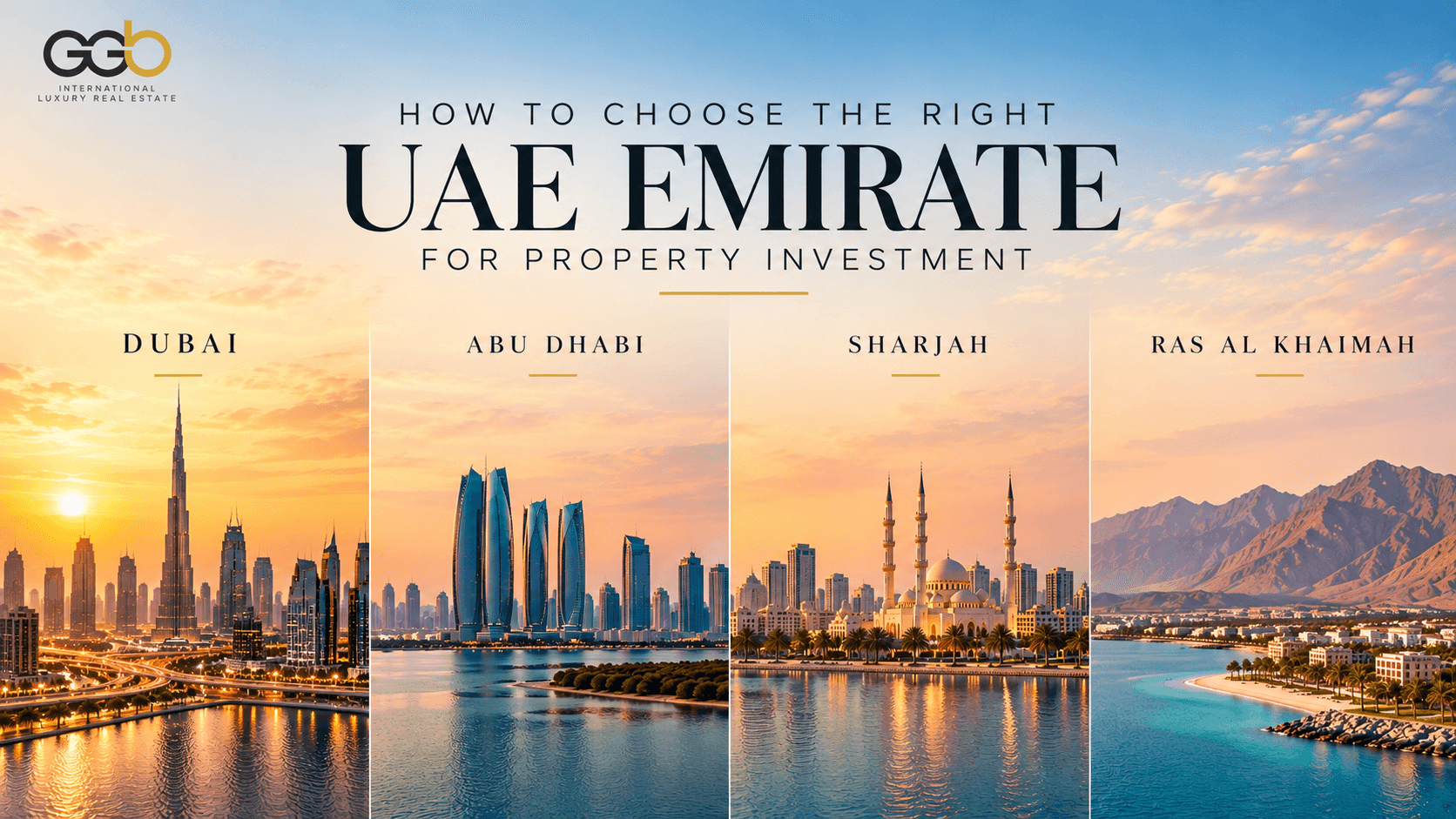
There is no single best emirate for every property investor. The right choice depends on what you need the property to do, how long you plan to hold it, and who you expect will rent or buy it later.
Dubai, Abu Dhabi, Sharjah and Ras Al Khaimah each have different market characteristics, lifestyle options and demand drivers. Comparing them only by price or projected return can leave out the factors that shape your investment decision.
In this episode of The Dubai Connect® Podcast, I speak with Tariq Jarrar of Devmark about how investors can compare the Emirates and match a property market to a specific strategy.
Watch the full conversation with Tariq Jarrar on The Dubai Connect® Podcast.
What should investors decide before choosing an Emirate?
Start with your objective. Are you looking for rental income, potential capital appreciation, a home for your family, a future resale, residency eligibility, or a combination?
Then set your intended holding period and think about your future buyer or tenant. A property that may suit a long-term owner can be a poor fit for someone who expects to resell quickly. Your intended use, financing plan and tolerance for risk should guide the market comparison.
The episode’s central point is simple: you are not investing in an Emirate in the abstract. You are choosing a specific property for a specific purpose, with a likely future renter or buyer in mind.
How do Dubai, Abu Dhabi, Sharjah and Ras Al Khaimah differ?
Dubai: an established market with a broad international profile
Dubai is widely recognized by international buyers and has a larger, more active property market than the other Emirates discussed in this episode. That can matter to investors who place a high value on a broad pool of potential buyers and tenants.
Market size does not make every Dubai property easy to resell. Liquidity still depends on the asset, its price, location, competing supply and demand when you are ready to exit. An investor should assess the specific community and property rather than assume that a Dubai address guarantees a quick sale.
Abu Dhabi: a different balance of supply, lifestyle and investment drivers
Abu Dhabi has its own development priorities, residential districts and lifestyle appeal. Tariq and I discuss how waterfront living, cultural destinations, family needs and a more controlled development approach can influence an investor’s choice.
For some buyers, the decision may also involve where they plan to live, where their children will attend school, or which lifestyle they prefer. Those personal factors can change the right answer, even when two properties appear similar on paper.
Sharjah: a distinct value proposition and community lifestyle
Sharjah offers a different pace and lifestyle from Dubai. In our conversation, we discuss its family-oriented communities and the way some developments are planned as destinations where residents can access daily needs within the community.
Investors should still assess the specific development, access, likely tenant profile, price and resale audience. A lower entry price by itself does not establish that a property is better value.
Ras Al Khaimah: a market shaped by its own location and attractions
Ras Al Khaimah is known for its beaches, mountains and leisure-oriented appeal. The episode looks beyond the attention generated by major projects and discusses the Emirate’s broader lifestyle and development plans.
As with any market, investors should separate the long-term potential of an Emirate from the merits of one property. Consider the developer, delivery timeline, entry price, future competing supply, likely rental demand and the depth of the resale market.
Which UAE property market has the best liquidity?
Liquidity describes how readily an asset can be sold at a reasonable price. In the episode, Tariq explains why Dubai’s international profile and transaction volume can make it more liquid than the other Emirates discussed.
That is a market-level distinction, not a promise about an individual property. If your plan depends on a short holding period, assess the likely buyer pool for that unit, any resale conditions, construction timing and costs of exiting. A long-term investor may weigh those factors differently.
Is property financing the same across the Emirates?
The episode makes an important distinction: UAE Central Bank rules apply across the country, while an individual lender decides how it will assess a borrower and transaction. A foreign buyer’s financing options can depend on the bank, the buyer’s financial profile, the property and the stage of purchase.
Do not assume that a property market or payment plan automatically means financing will be available. Confirm current terms directly with a qualified lender before committing.
Related guide: Can Americans Get a Mortgage in Dubai? A Guide for U.S. Buyers
Do Golden Visa rules differ by Emirate?
The episode discusses how residency pathways and timing may vary by Emirate and by the type of property purchase. Investors should confirm the current eligibility criteria with the relevant authority before relying on a property purchase for residency.
Treat visa eligibility as one factor in the decision. First determine whether the property, price and exit plan make sense for your investment goals.
Related guide: Dubai Golden Visa Through Real Estate Investment
Questions to ask before buying UAE property
Before selecting an Emirate or a property, ask:
- What is my main objective: income, appreciation, personal use or a combination?
- How long can I hold the property?
- Who is the most likely tenant or future buyer?
- How much liquidity do I need, and what would a realistic exit involve?
- What are the full acquisition, financing and ownership costs?
- How do the developer, location and competing supply affect this specific property?
- Have I verified current financing and residency requirements with the relevant professionals or authorities?
These questions help turn a broad market comparison into property-level due diligence.
Related guides: How I Evaluate a Dubai Real Estate Investment Before Recommending It and How Can Americans Safely Buy Off-Plan Property in Dubai?
Watch the earlier UAE market comparison
I also created a separate video comparing Dubai, Abu Dhabi and Ras Al Khaimah and asking which Emirate’s property market may fit different investment goals. Watch “Which Emirate’s Property Market is The Best Investment?” on YouTube, or read the companion episode page.
The new conversation with Tariq adds a broker-and-investor discussion that includes Sharjah and digs into liquidity, lifestyle, financing and exit considerations.
For a market-by-market breakdown, read Dubai vs Abu Dhabi vs Ras Al Khaimah Real Estate: Which Is the Best UAE Property Investment in 2026?.
The right Emirate depends on the asset and the plan
Dubai, Abu Dhabi, Sharjah and Ras Al Khaimah are not interchangeable markets. Each can suit different investment goals, lifestyles and holding periods. The useful question is not simply, “Which Emirate is best?” It is, “Which property fits my objective, at this price, with a realistic tenant or buyer and a clear exit plan?”
If you are comparing property in the UAE, begin with your budget, your intended holding period and your priority: rental income, potential appreciation, personal use or a mix. Then evaluate the specific asset and its risks before making a decision.
Watch the full Tariq Jarrar episode.
About Ghada “GG” Benitez
Ghada “GG” Benitez is CEO of GG Benitez International, a California Licensed REALTOR® with Realty Executives Dillon (DRE #01487964), a Dubai RERA Licensed Real Estate Broker with Prime Capital Realty (BRN #83445), and a Certified International Property Specialist (CIPS®). She hosts The Dubai Connect® Podcast and advises American and global investors on Dubai and UAE real estate.