


Insights
What Happens to Dubai Real Estate After the Iran War?
June 22, 2026 · Updated October 5, 2026
Written by Ghada “GG” Benitez
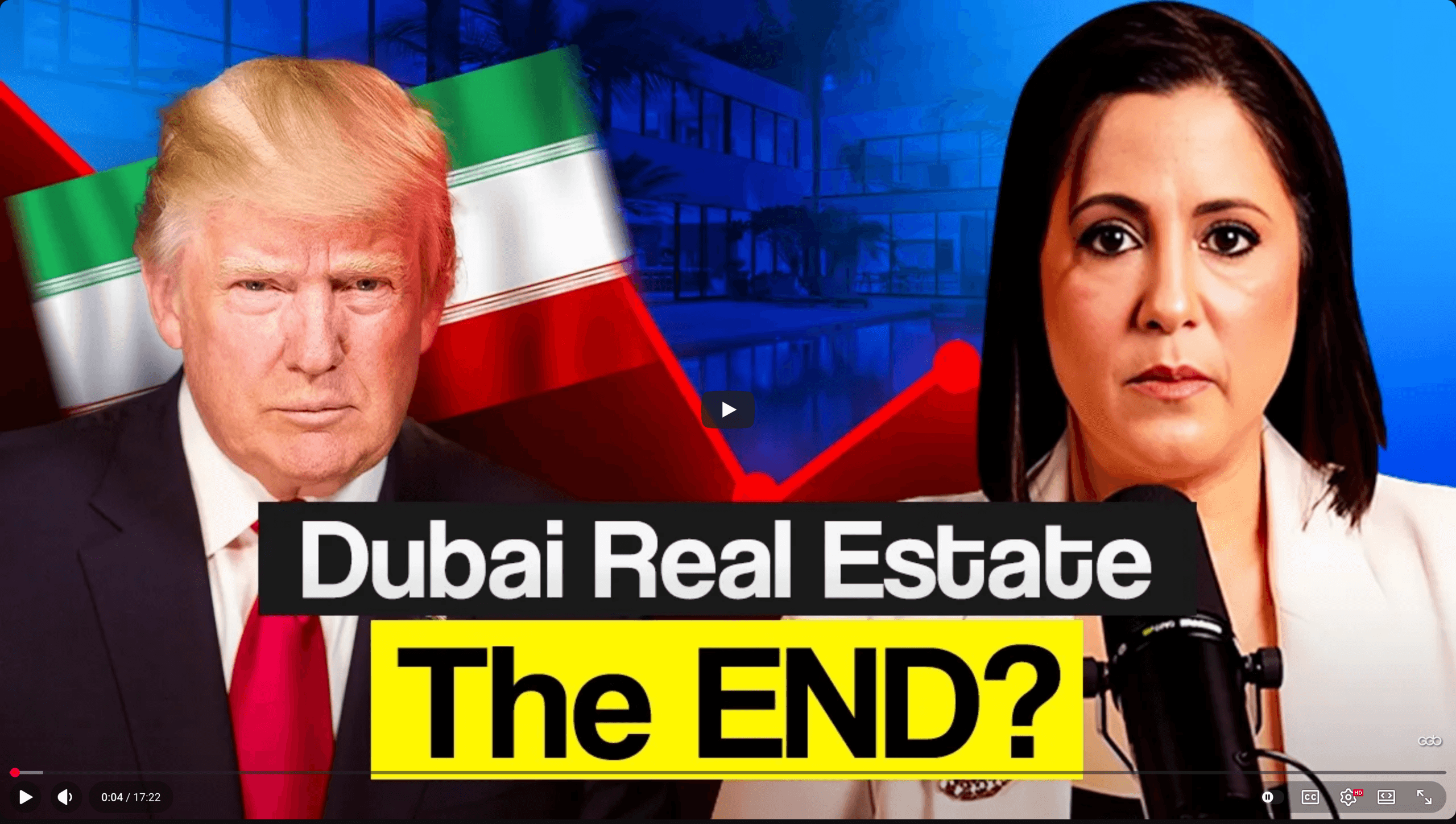
When geopolitical tensions dominate headlines, investors often make decisions based on fear rather than facts. During the recent Iran conflict, many people assumed Dubai’s property market was heading toward a major downturn. But when we look beyond the headlines and examine the actual numbers from the Dubai Land Department, a very different picture emerges.
As a real estate professional licensed in both Dubai and California, I wanted to look beyond speculation and focus on what the data actually revealed. More importantly, I wanted to understand what this moment means for investors considering Dubai real estate today.
Before making investment decisions, investors should understand the broader fundamentals driving the market. Start with our Dubai Real Estate Learning Center.
Dubai Real Estate Learning Center
The Headline That Misled Many Investors
When the conflict escalated, financial markets reacted immediately.
Shares of major developers experienced declines and headlines suggested Dubai real estate was in trouble.
However, there is a critical distinction investors need to understand.
Stock prices and physical real estate values are not the same thing.
Publicly traded companies can lose value in hours. Physical real estate markets operate differently. Property transactions, buyer demand, rental performance, and asset values move on a completely different timeline.
Many investors incorrectly assumed declining developer share prices meant Dubai property values had fallen equally.
That was not the case.
For official transaction data, investors should always refer to the Dubai Land Department.
What Dubai Land Department Data Actually Showed
Before the conflict began, Dubai’s property market was already experiencing record activity.
January 2026 recorded approximately AED 72.4 billion in residential property sales.
When uncertainty increased, transaction activity slowed.
But slowing is not the same as collapsing.
Many buyers simply paused while evaluating developments.
As confidence returned, activity rebounded.
Despite the conflict beginning during the quarter, Dubai recorded approximately AED 176.7 billion in property sales during Q1 2026, representing year-over-year growth.
For investors, the lesson is simple:
A market pause is not the same thing as a market crash.
The Three Risks Investors Should Actually Focus On
Buying the Wrong Asset
The biggest mistake investors make is treating all Dubai real estate as if it behaves the same way.
A luxury waterfront property does not perform the same way as a mid-market apartment.
A villa community behaves differently than a high-density tower.
Commercial investments follow entirely different demand drivers.
Choosing the Wrong Developer
Investors often hear:
Location, location, location.
In Dubai, another factor matters equally:
Developer, developer, developer.
Construction quality, reputation, financial strength, delivery history, and execution all matter.
Having the Wrong Time Horizon
The strongest investors focus on long-term fundamentals.
These include:
Population growth
Economic diversification
Infrastructure investment
The Dubai 2040 Urban Master Plan
Corporate relocation
International investment inflows
What Happened After the Ceasefire?
Following the ceasefire announcement, market sentiment improved rapidly.
Property viewings increased.
Buyer inquiries returned.
Developers reported stronger conversion rates from inquiry to contract.
This pattern has repeated throughout Dubai’s history.
Periods of uncertainty are often followed by renewed confidence and recovery.
Why Off-Plan Transactions Matter
A significant percentage of residential transactions in Dubai involve off-plan properties.
That means many investors are making decisions based on where Dubai will be in three, five, and ten years rather than where it is today.
Investors considering residency opportunities should also review our Dubai Golden Visa Guide.
Where I See Opportunity Today
Prime Waterfront Real Estate
Communities such as Palm Jumeirah, Palm Jebel Ali, Dubai Creek Harbour, Dubai Maritime City, and Rashid Yachts & Marina continue attracting investor attention because supply remains limited.
Scarcity has historically been one of the strongest drivers of appreciation.
Villas and Townhouses
Family migration continues supporting demand for larger homes, private outdoor spaces, schools, and community amenities.
Many analysts expect villa communities to remain one of Dubai’s strongest-performing segments.
Grade A Commercial Real Estate
Commercial property remains one of the most overlooked sectors in Dubai.
Premium office space benefits from:
Corporate relocation
Foreign direct investment
Business expansion
Demand for quality workspace
My Outlook on Dubai Real Estate
Dubai is not one market.
It is multiple micro-markets moving at different speeds.
Some segments will outperform others.
Some developers will outperform others.
The investors who focus on long-term fundamentals rather than short-term fear are often best positioned for future opportunities.
Investors evaluating financing options should review our guide on How Americans Finance Property in Dubai.
Frequently Asked Questions
Did Dubai real estate crash during the Iran conflict?
No. Transaction activity slowed temporarily, but Dubai Land Department data did not indicate a market collapse.
Is Dubai still safe for real estate investors?
Every investment carries risk, but many investors continue viewing Dubai as a major global investment destination.
Can Americans buy property in Dubai?
Yes. Americans can purchase freehold property in designated ownership areas throughout Dubai.
Can foreigners obtain financing in Dubai?
Yes. Financing options are available through UAE lenders subject to qualification requirements.
What property types may perform best long term?
Many investors focus on waterfront communities, villa developments, and select commercial opportunities.